

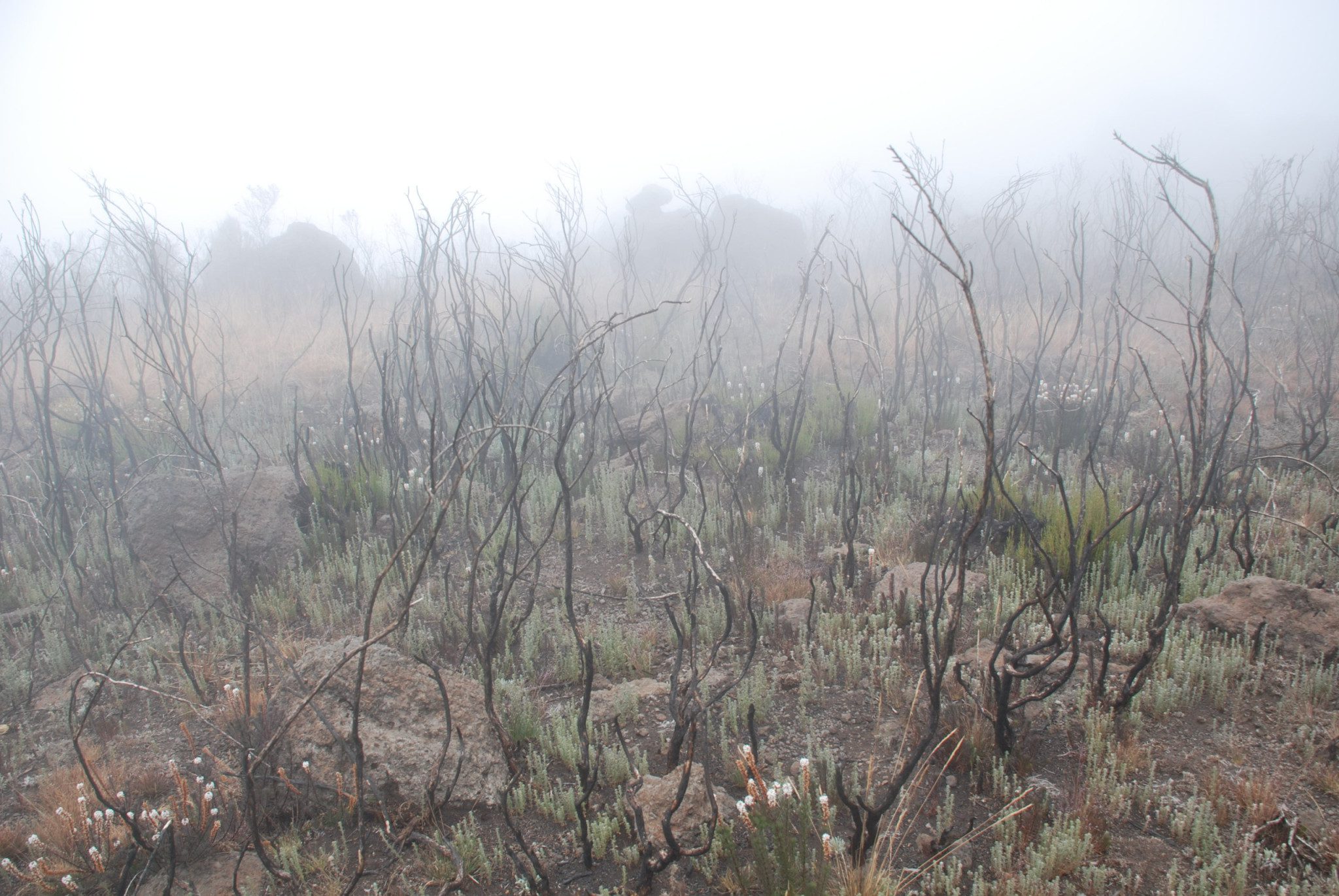
UPDATE: 8 October 2026
As of today, the park authorities, TANAPA, have declared all the routes on Kilimanjaro open once more. We should imagine that those taking the routes that were affected by the fire will witness a lot of damage on their trek – and that may affect whether you want to change to another trail after all. But at least you have a choice whether to take your original trail or want to move to a different one.
We’ll keep you updated if we hear any more.
Two major fires break out on the mountain in one month
The month of September has seen two fires break out on the slopes of Africa’s highest mountain.
The fires, which are not linked, broke out on opposite sides of the mountain.
Earlier this month a fire broke out near the Rongai Route, on Kilimanjaro’s north-eastern slopes.
The first started at around 3.30pm on September 3rd in the Kikerelwa region, near the border with the populous Rombo District.
The fire quickly spread over several acres on what is the hottest and driest side of the mountain, though was eventually brought under control by the firefighting team of the mountain’s own Conservation Force, as well as tour operators and local villagers.
Then on September 27th, climbers due to start on the Lemosho Route were forced to divert to the Machame Route instead to avoid another large fire that had broken out on Kilimanjaro’s western side.
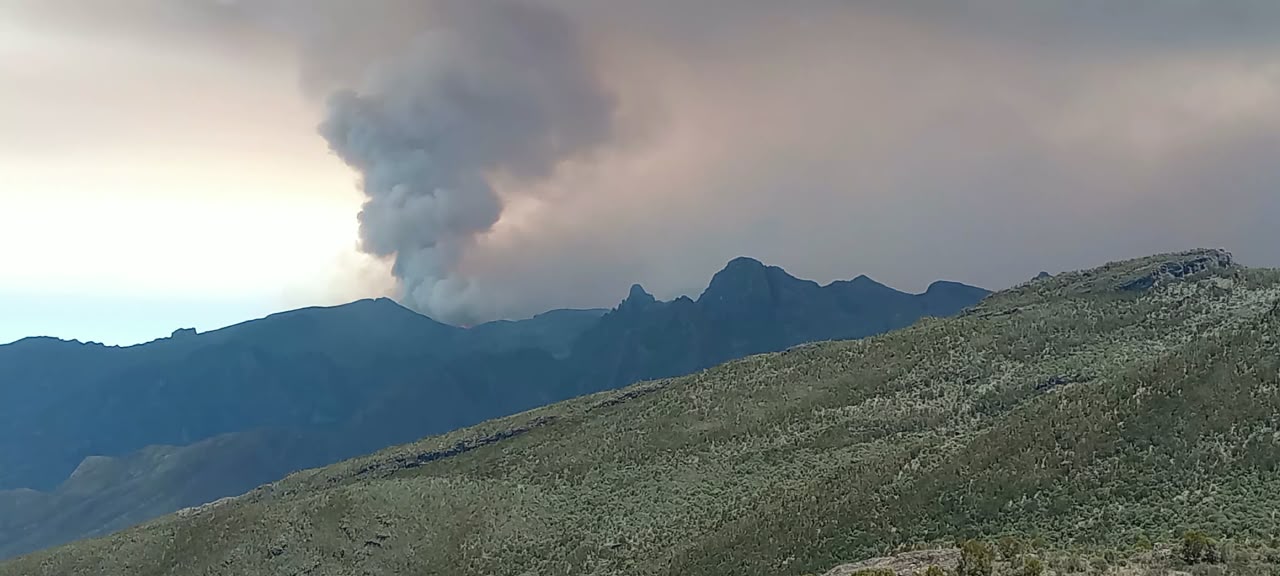
Two days later, when this image was taken, the blaze still seemed to be raging.
In the absence of any official announcement details of this latest blaze are currently sketchy.
The cause of both fires, too, currently remain unknown, though investigations are ongoing. Previous fires have a variety of causes, with human activity usually the main culprit. Cooking mishaps on treks, and cigarettes tossed by porters and trekkers into tinder-dry scrub have previouslly been blamed. The activities of local honey harvesters, too, who light fires to smoke the bees out of their hives, have also come under the spotlight too. Indeed, both of the biggest fires in the last ten years (in 2020 and 2022) were said to be caused by the carelessness of humans working on the mountain.
Update 8 October 2026
Our climbers who were booked on the Lemosho or Alternative Lemosho trails are currently being moved to walking on the Shira trail.
While it lies close to the Lemosho Route, the Shira trail is actually a 4WD track rather than a footpath, so it’s not as charming as Lemosho or Alternative Lemosho trails (which share the same path for the first two days anyway). It is used by emergency vehicles to take people who are injured or are struggling with the altitude from the Shira Plateau and off the mountain.
So while the Shira Route is an inferior path to the usual trail, it does still have some interest (the only time I’ve seen a baboon on the mountain was on the Shira Route, for example). And once you’ve reached the Shira Plateau, you can continue on the Lemosho or Alternative Lemosho Route as planned. And we do think this is a better alternative than diverting to the Machame Route, which was what the park authorities were initially asking us to do. Machame is (too) busy at the best of times, so adding even more people to that trail wouldn’t be pleasant.
As for the Rongai Route, climbers booked on this trail were also being diverted. Two climbers of ours who were booked to start on this trail on the 5th were instead diverted to the Marangu Route. Not ideal – we do think it’s inferior to the Rongai Route, not least because you take the same route to descend the trail as you did to climb up it, so you essentially see the same scenery twice. But with two routes now closed, the park authorities had little choice – and so, as a consequence, do we.
If you are booked on either Rongai or Lemosho Routes (or the Northern Circuit), hopefully your trekking operator will be keeping you abreast of developments. If not, do write to us and we’ll let you know the latest.